
Irrevocable Trust Attorney in Coral Gables
Some Assets Need More Than a Plan. They Need Protection
Most families spend years building something worth protecting—a home in Coral Gables, retirement accounts, real estate, a business. What most of them don’t realize is that without the right legal structure, those assets can be exposed to creditors, civil judgments, and Florida’s Medicaid recovery program the moment something goes wrong.
When you transfer assets into an irrevocable trust, they leave your estate entirely. That’s not a loophole—it’s the entire point. Assets the state can’t count as yours can’t be taken to pay your debts, recover Medicaid costs, or be reached in a lawsuit.
At Family Life Law, our irrevocable trust attorneys have helped families throughout Coral Gables, Pinecrest, Coconut Grove, and Miami-Dade use irrevocable trusts to protect their homes, preserve their estates, and keep their legacies intact for the people they love.
What an Irrevocable Trust Actually Does
Once you transfer assets into an irrevocable trust, those assets are no longer legally yours. Under Florida Statute § 736.0602, the terms are binding once set—you give up control, and in exchange, you get protection that a revocable trust simply cannot offer.
That permanence is exactly what makes it effective.
Creditors can’t touch what isn’t yours. Assets inside an irrevocable trust are no longer part of your personal estate. That means they’re shielded from creditors, civil judgments, and legal claims. For business owners, professionals with liability exposure, or anyone concerned about future financial risk, this is one of the most powerful protections available under Florida law.
Medicaid can’t recover what you don’t own. Florida’s Medicaid Estate Recovery Program under § 409.9101 allows the state to make claims against your estate after you pass to recover the cost of long-term care. A revocable trust offers no protection here—because you still control those assets, the state counts them as yours. An irrevocable trust removes them from your estate entirely. There’s nothing for the state to recover. The critical factor is timing: Florida enforces a five-year lookback period, meaning the transfer has to happen well before you need Medicaid for it to hold up.
Your taxable estate shrinks. Assets transferred into an irrevocable trust are excluded from your taxable estate for federal estate tax purposes. While Florida has no state estate tax, families with larger estates subject to the federal threshold benefit significantly from this. An irrevocable trust attorney can walk you through exactly how this applies to your situation.

When Families in Coral Gables Need an Irrevocable Trust Attorney
An irrevocable trust isn’t the right tool for everyone—but for the families it fits, nothing else comes close. You may need to speak with an irrevocable trust attorney if:
You’re concerned about Medicaid and long-term care costs. Nursing home care in Miami-Dade is expensive, and Medicaid planning requires moving assets out of your estate well in advance. The five-year lookback window means the earlier you act, the better protected you are. Waiting until you need care is waiting too long.
You want to protect your Coral Gables home from estate recovery. Your home is likely your most valuable asset. If it passes through a revocable trust or goes through probate, Florida’s Medicaid recovery program can make a claim against it. An irrevocable trust removes it from that exposure—transferring it outside your estate while you’re still alive so there’s nothing to recover when you’re gone.
You have significant assets and creditor exposure. Business owners, physicians, real estate investors, and others with professional liability concerns use irrevocable trusts specifically because assets inside them are beyond the reach of future creditors and judgments.
You want to provide for a loved one with special needs. A properly drafted special needs trust is a type of irrevocable trust that holds assets for a beneficiary receiving SSI or Medicaid without disqualifying them from those benefits. A direct inheritance would eliminate their eligibility immediately. The trust preserves it entirely.
What Working With an Irrevocable Trust Attorney at Family Life Law Looks Like
Tell Us Everything
Your first conversation is a judgment-free deep dive. We look at what you own, how it's titled, what you're trying to protect, and what flexibility you need going forward. Irrevocable trusts require careful planning before anything is signed—we make sure you fully understand what you're doing and why before we draft a single page.
Get a Clear Path Forward
We structure the trust around your specific goals—Medicaid planning, creditor protection, estate tax reduction, or providing for a family member with special needs. We handle the drafting, the transfer of assets into the trust, and coordination with your other estate planning documents so nothing falls through the cracks.
Get Back to Your Life
Once the trust is in place and properly funded, the protection is active. We remain available as your situation changes and keep you informed of anything that could affect your plan—including changes to Florida law or federal Medicaid rules that matter to your trust.
What our customers say
EXCELLENT Based on 213 reviews
 Posted on Google
 Anthony CaloreJulio Morales was excellent. Him and his team were swift and extremely helpful. 1 month probate with a very justified rate.Posted on Google
 Rachel CunninghamJulio recently supported me through the probate process after the death of my parents. We had one account that was not included in their trust (work was done by another attorney at another office unrelated to Family Life Law). Julio stands out as a top notch attorney because of his incredible responsiveness and follow through. Chase Bank did not want to disburse funds, even with a judge's order signed, but Julio persisted and supported me, going well above and beyond the scope I expected. I have recommended Julio to several friends/family already and have told other attorneys I know how incredible he is! I plan to work with Julio to now create my own trust and go through the process! I highly recommend Julio.Posted on Google
 Nayletay PerezTuve una gran experiencia con este bufete de abogados, estoy muy contenta con su trabajo, el proceso fue rapido, agradecida con Elvis por su atencion, muy profesional, te explica todo muy bien aclarando todas las dudas, sinceramente los recomiendo mucho. Es un bufete muy profecional y todos son muy atentos . Gracias...Posted on Google
 Abel Santiago GuerreroThis was a very trying event, life changing. My main concern was making sure my son was in safe place, healthy, and happy. The Family Law Firm's entire staff made sure that was always the case and they included this father's well-being also. Stressful times made as easy as possible. Somehow they found a way to make me look a that big picture and not just the immediate resolution. Although, those moments if immediate solution were taken care of also. The communication was exceptional, Mr. Brett listened, and when he needed to let me know to calm down and stop talking so much because it could be costly, he found humorous ways to let me know. We all know these matters are costly, but no money can replace keeping a family from resolving such issues than with civility and as amicable as possible. Thank you from the bottom of my heart to the entire F&M "A Law Firm" staff. Be Blessed Always, Mr. Brett, Ms. Sarah, Ms. Capote, and Ms. Priscilla. Take good care.Posted on Google
 FUJIElvis Acosta was great, he helped us out with everything we needed in terms of our estate planning. He was very thorough and explained everything and was patient. He made great recommendations and we're very happy with our service and Martha Mendez Esq. All of the personnel were friendly!Posted on Google
 Yonel EnriquezThe team and Feinstein & Mendez was spectacular to work with. Brett took real care of me, was diligent, was transparent, and really made me feel comfortable in the process. I appreciated his candor and most of all how he made sure I felt comfortable with the approach. Sometimes its not what you say to people its how you make them feel, and Brett made me feel good and protected as he represented me. Thank you again Brett for everything and if you need a team of Attorneys to help and take care of you, who will have your back, and who will make sure you are well represented, Give Feinstein & Mendez a call, you won't regret it.Posted on Google
 Lydia LopezI was very satisfied with the help provided by Julio Morales. I worked with him on a probate case and everything was done over the phone. The probate process was quick and efficiently completed.Posted on Google
 Mario GonzalezHad a great experience in my consultation with Martha Mendez. She took her time and explained about lady bird deed.Posted on Google
 Rosemary CohnWonderful experience setting up our estate plan! We couldn't be happier with the service we received at Feinstein & Mendez, P.A. Creating an estate plan can feel overwhelming, but Attorney Martha Méndez and her assistant Elvis Acosta made the entire process smooth and stress-free from day one. Ms. Méndez took the time to walk us through every single detail of our trust with so much patience and clarity. We never felt rushed, and she answered all of our questions thoroughly. Elvis was fantastic as well, super responsive, organized, and on top of every detail, making sure we received all of our digital and physical documents promptly. It is such a relief to know that our family’s future is properly protected. If you need estate planning services, we highly recommend this firm. They are professional, transparent, and a true pleasure to work with. — Mario & Rosemary Cohn Excelencia, claridad y profesionalismo absoluto Queremos expresar nuestro más sincero agradecimiento a todo el equipo de Feinstein & Mendez, P.A., y de manera muy especial a la Abogada Martha Méndez y a su asistente Elvis Acosta, por el extraordinario servicio brindado en la elaboración de nuestro plan patrimonial (Estate Planning). Desde nuestra primera consulta hasta la entrega final de los documentos originales y digitales, el proceso fue impecable. La abogada Méndez demostró un conocimiento técnico profundo, explicándonos cada detalle de nuestro Fideicomiso y los instrumentos legales con absoluta claridad y paciencia. Por su parte, Elvis Acosta se destacó por su eficiencia, pronta comunicación y atención al detalle en cada paso del trámite. Nos sentimos completamente tranquilos y respaldados al saber que nuestro patrimonio y el futuro de nuestra familia están protegidos por verdaderos profesionales. Recomendamos a Feinstein & Mendez, P.A. sin reserva alguna a cualquiera que busque un servicio legal transparente, riguroso y de primer nivel. — Mario y Rosemary Cohn
Answering Frequently Asked Questions
What's the difference between an irrevocable trust and a revocable trust?
The core difference is control—and what that control costs you. A revocable living trust lets you stay in control of your assets, change the terms whenever you want, and revoke it entirely. But because you control it, creditors and Medicaid can still reach it. An irrevocable trust gives up that control in exchange for real legal protection. The assets leave your estate, and with them goes the exposure. Which one is right for you depends entirely on what you’re trying to accomplish.
Can I get assets back out of an irrevocable trust?
Generally, no, and that’s by design. Under § 736.0602, the terms of an irrevocable trust are binding once established. You can’t simply change your mind and take the assets back. There are limited circumstances where a court may allow modification, but they’re narrow. This is why the planning conversation before the trust is created matters so much. We don’t let clients sign anything until they fully understand what they’re committing to.
Does Florida's homestead exemption still apply if my home is in an irrevocable trust?
It can, but only if the trust is structured correctly. The Save Our Homes cap and creditor protections under § 196.031 don’t automatically follow the property when it’s transferred into a trust—the trust has to be drafted specifically to preserve those protections. Getting this wrong means losing benefits you may have had for decades. We draft every irrevocable trust with Florida’s homestead rules built in.
How does the five-year Medicaid lookback period work?
Florida’s Medicaid program looks back five years from the date of your application to identify asset transfers made for less than fair market value. If you transferred your home or other assets into an irrevocable trust within that five-year window, Medicaid can treat those assets as still available—which can delay or deny your eligibility. The lookback period is exactly why families who are thinking about long-term care planning need to act early, not when a health crisis is already underway.
Can an irrevocable trust be used alongside a will or other estate planning documents?
Yes—and it usually should be. An irrevocable trust handles the specific assets transferred into it, but it doesn’t replace a last will and testament, a durable power of attorney, or a living will. A complete estate plan uses all of these tools together, each covering what the others don’t. We make sure every piece fits.
What if I need Medicaid planning but I'm also going through a divorce?
Both issues affect your estate at the same time, and handling them separately can create serious conflicts. Because Family Life Law handles both family law and estate planning, we look at the full picture—what’s happening in your divorce, what you’re trying to protect, and how your trust needs to be structured to account for both. You don’t have to coordinate two different firms.
The Right Protection Requires the Right Attorney.
An irrevocable trust is a powerful tool—but only when it’s drafted correctly, funded properly, and structured around your specific situation. A trust that doesn’t account for Florida’s homestead rules, the Medicaid lookback period, or your broader estate plan doesn’t deliver the protection it promised.
At Family Life Law, our irrevocable trust attorneys build these plans for Coral Gables families every day. We’ll tell you honestly whether an irrevocable trust is right for you—and if it is, we’ll make sure it works exactly the way it’s supposed to.

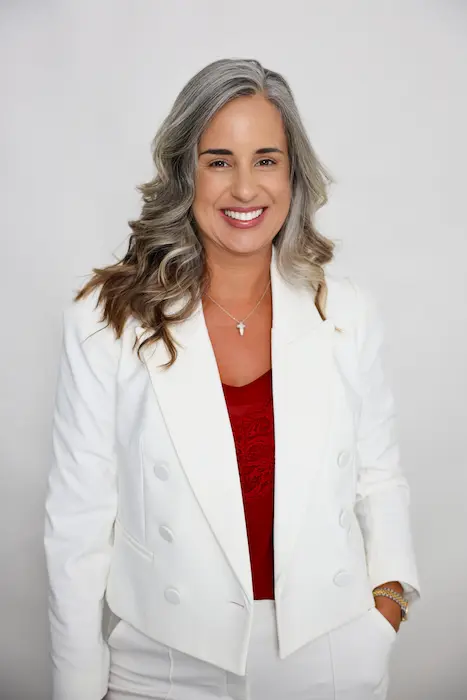
Martha Mendez
Martha Mendez, Esq. is a highly dedicated attorney with seven years of experience specializing in elder and estate planning, real estate, and family law. Her unique professional journey—rising from a legal secretary and paralegal to an attorney—reflects a deep commitment to the field, culminating in a Juris Doctor earned cum laude from St. Thomas University. A member of the National Academy of Elder Law Attorneys, Martha is passionate about protecting her clients' assets and navigating complex life transitions with expertise. When she isn't advocating for her clients, the Florida International University alumna enjoys boating, kayaking, and traveling with her husband and three children.